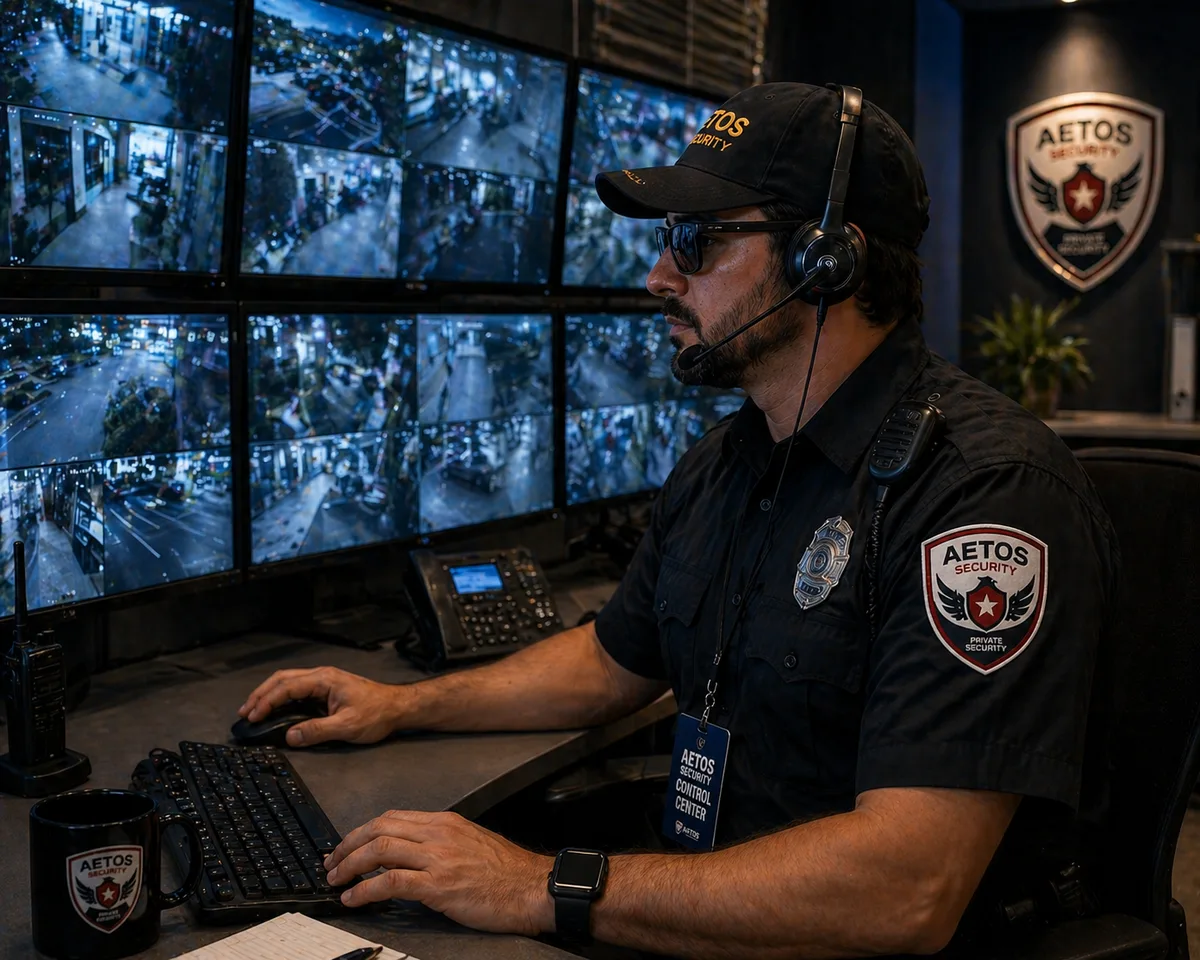
Building an Effective Surveillance Strategy: Coverage, Technology, and Legal Compliance
Surveillance system effectiveness depends on scientific camera placement, appropriate technology selection for your facility, proper storage infrastructure, and awareness of California privacy laws. Poor system design creates expensive false security—cameras positioned at wrong angles, insufficient resolution, or inadequate storage that deletes evidence before incidents occur. Strategic surveillance combines architectural analysis, technology specification, and legal compliance to maximize both deterrence and evidence capture.
Camera Placement Science: Coverage Mapping and Blind Spot Elimination
Professional placement requires site-specific analysis:
- Facility Walk-Through Documentation: Site assessment includes photographing all access points, identifying theft-vulnerable areas, documenting structural features affecting sight lines
- Coverage Mapping: Create visual diagram of facility with proposed camera locations overlayed with coverage zones showing what each camera sees and where gaps exist
- Height & Angle Optimization: Cameras positioned 8-10 feet above ground (lower is vandalism-vulnerable, higher loses facial recognition capability); angle adjusted to capture faces at entry points and high-value areas
- Overlap Strategy: Multiple cameras covering critical areas provide redundancy if one fails; overlapping coverage enables 3D reconstruction of incident scenes
- Blind Spot Elimination: Identify potential hiding spots or areas where criminals could operate unobserved; place cameras or adjust angles to eliminate these vulnerabilities
- Lighting Integration: Poor lighting degrades camera performance; low-light cameras required in dark areas; dedicated lighting upgrades improve overall performance
Resolution Requirements: Facial Recognition vs. Overview Monitoring
Camera Resolution Specifications
- Facial Recognition Cameras (entry points, cash areas): Minimum 4K resolution (8MP); captures identifying facial features up to 20-30 feet; enables law enforcement identification
- Wide-Area Overview Cameras (parking lots, hallways): 2-4MP HD sufficient; priority is documenting activity and movement rather than identification detail
- Night Vision Requirements: Infrared or low-light cameras in areas without adequate lighting; IR illuminators allow recognition in complete darkness
- Pan-Tilt-Zoom Cameras: Motorized PTZ cameras at monitoring stations allow real-time adjustment; essential for large areas or when human monitoring is available
Storage Calculation: Footage Retention Periods and Capacity Planning
Adequate storage prevents evidence loss and supports incident investigation:
- Retention Period Determination: 30 days continuous recording is standard minimum; many jurisdictions require longer (60-90 days); theft/fraud investigation often requires 3-6 month review of historical patterns
- Bitrate & File Size Calculations: 4K cameras generate 5-20 GB per day depending on frame rate and compression; 8 cameras = 40-160 GB daily = 1.2-4.8 TB monthly storage requirement
- Cloud vs. On-Site Storage Trade-offs: Cloud storage offers redundancy and remote access but requires adequate bandwidth and ongoing subscription fees; on-site NVR is faster access but vulnerable to local system failure
- Hybrid Architecture Best Practice: On-site storage for recent weeks with immediate access; cloud backup for long-term retention and disaster recovery
- Evidence Preservation Protocol: Once incident occurs, relevant footage flagged for retention beyond standard rotation cycle; prevents accidental deletion during investigation
Privacy Laws: California CCPA Implications for Video Surveillance
California privacy law creates specific obligations for surveillance operations:
- Notice Requirement: California law requires visible notice that surveillance is in operation; signage must be clear and legible at entry points and in monitored areas
- CCPA Data Protection: Video footage is "personal information" under California's Consumer Privacy Act (CCPA); data minimization principles apply—collect only what's necessary for security purposes
- Bathroom/Changing Room Prohibition: Any recording in bathrooms, changing rooms, or areas with reasonable expectation of privacy is illegal regardless of notice or business purpose
- Incident-Specific Collection: Targeted recording for specific security investigations is permissible; continuous recording of employee work areas may exceed legal scope
- Data Retention Limits: Retention periods must be reasonable and justified by security purpose; indefinite retention of footage not needed for security is potentially unlawful under California privacy standards
- Data Access Rights: Individuals may have rights to know what footage exists of them; privacy policies must disclose retention practices and access procedures
Integration with Guard Services: When Cameras Supplement Human Security
Optimal security combines camera coverage with trained personnel response:
- Real-Time Monitoring Integration: Guards monitor camera feeds during working hours; motion alerts trigger immediate response to suspicious activity
- Camera-Assisted Patrols: Mobile patrol guards coordinate with fixed cameras; can see what cameras observe from distance, enabling faster response to identified threats
- After-Hours Monitoring: When guards are not on-site, remote monitoring services watch feeds and contact authorities if incidents detected
- Incident Documentation: Guards ensure proper evidence handling and preservation; footage extracted professionally and maintained in evidence chain of custody for investigations
- Training Enhancement: Surveillance footage reviewed in guard training to reinforce proper procedures and identify improvement opportunities
ROI Metrics: Quantifying Surveillance Benefits
Professional surveillance systems generate measurable security and business returns:
- Incident Reduction: Facilities with comprehensive surveillance experience 50-80% reduction in theft, vandalism, and unauthorized access incidents within first 12 months
- Insurance Premium Savings: Most insurers offer 5-15% premium reductions for properties with monitored surveillance systems; savings often offset system cost within 2-3 years
- Liability Protection: Video evidence protects against false claims and provides clear documentation of incidents; reduces costly litigation
- Investigation Acceleration: Digital footage enables instant review and analysis vs. weeks of investigation without video; speeds law enforcement identification and prosecution
- Operational Efficiency: Facility managers identify patterns in theft, accidents, or operational issues; data-driven improvements reduce loss and improve procedures
Aetos surveillance design combines site-specific analysis, appropriate technology selection, California legal compliance, and integration with guard services. We build systems that prevent incidents, capture evidence, and deliver measurable ROI for your facility.